
- March 12, 2026
- Posted by: Precious David
- Category: Uncategorized
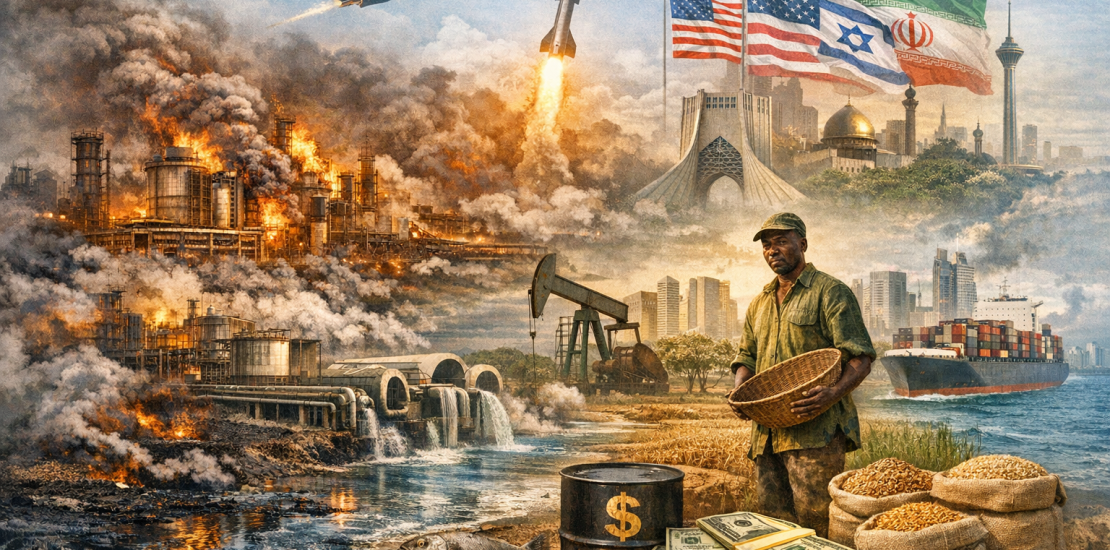
Modern warfare no longer affects only the countries directly involved in the conflict. Today, wars create ripple effects that extend across continents—impacting ecosystems, economies, food systems, and global climate stability. The escalating tensions and military confrontations involving Iran, United States, and Israel demonstrate how environmental damage has become one of the most enduring consequences of geopolitical conflict.
Airstrikes on energy infrastructure, disruptions to global shipping routes, threats to water systems, and the heavy carbon footprint of military operations are contributing to an emerging environmental crisis. While the immediate destruction occurs in the Middle East, the consequences reach far beyond the region. Countries like Nigeria—despite being geographically distant—are not immune to these impacts.
This article explores the environmental consequences of the Iran–US–Israel war, its global implications, and what it could mean for Nigeria’s economy, environment, and long-term sustainability.
One of the most immediate environmental consequences of warfare is air pollution caused by attacks on energy infrastructure. Military strikes on oil storage depots, refineries, and industrial facilities release enormous quantities of toxic pollutants into the atmosphere. In recent developments, airstrikes on oil-related facilities in Tehran reportedly generated large plumes of smoke and toxic clouds over parts of the city, raising concerns about respiratory health and environmental contamination.
(https://www.reuters.com/world/middle-east/strikes-create-toxic-clouds-over-tehran-2026-03-10/)
Burning petroleum infrastructure releases pollutants such as sulfur dioxide, nitrogen oxides, carbon monoxide, and fine particulate matter. These pollutants contribute to acid rain, soil degradation, and serious respiratory illnesses among exposed populations. Even more concerning is the massive release of greenhouse gases when large quantities of oil products burn uncontrollably. These emissions contribute to global warming, further intensifying the already fragile climate crisis.
Beyond the atmosphere, warfare also threatens soil and marine ecosystems. Bombing pipelines, oil terminals, and industrial storage facilities can lead to crude oil leaks and chemical contamination of surrounding land and waterways. Environmental analysts warn that damage to oil infrastructure near the Persian Gulf could trigger marine pollution that harms fisheries and coastal ecosystems.
According to the Conflict and Environment Observatory, environmental damage from armed conflict often persists for decades because toxic substances seep into groundwater and sediments, affecting biodiversity long after hostilities end.
(https://ceobs.org/the-emerging-environmental-consequences-of-the-israel-iran-war/)
Marine pollution has severe economic implications as well. Coastal communities that rely on fishing for livelihoods may experience long-term income losses if fish populations decline due to contaminated waters.
Water security is another environmental concern heightened by conflict in the Middle East. Many countries in the region rely heavily on desalination plants to convert seawater into drinking water. Nations such as Saudi Arabia, United Arab Emirates, and Kuwait obtain a significant portion of their potable water through desalination systems.
A report by The Guardian warns that desalination plants represent critical infrastructure that could become vulnerable during military conflict. Damage to these facilities could trigger water shortages affecting millions of people.
(https://www.theguardian.com/world/2026/mar/11/severe-water-stress-why-desalination-plants-are-gulf-greatest-weakness)
The environmental consequences of damaged desalination plants extend beyond human water access. These facilities discharge concentrated brine back into the ocean, and disruptions to their operation can disturb delicate marine ecosystems.
Another overlooked environmental dimension of war is its contribution to climate change. Modern military operations are highly fuel-intensive. Fighter jets, warships, armored vehicles, and missile systems consume massive quantities of fossil fuels, producing large volumes of carbon emissions.
The United Nations notes that armed conflicts weaken environmental governance and increase greenhouse gas emissions, undermining global climate action.
(https://www.un.org/en/peace-and-security/how-conflict-impacts-our-environment)
In addition, rebuilding destroyed infrastructure after a war often requires large-scale industrial production—cement, steel, transportation, and energy—further increasing global carbon emissions.
Beyond environmental damage, the war also carries significant economic implications for the global system. The Middle East remains one of the most critical energy hubs in the world. A substantial portion of global oil shipments passes through the Strait of Hormuz, a narrow maritime corridor connecting the Persian Gulf to international markets.
Any disruption to shipping in this region can affect energy prices worldwide. Analysts cited by Business Insider warn that prolonged conflict in the region could increase fuel prices, disrupt fertilizer supply chains, and trigger broader inflationary pressures.
(https://www.businessinsider.com/food-inflation-oil-prices-fertilizer-farmers-iran-war-shipping-hormuz-2026-3)
Fertilizer production relies on chemical components transported through global shipping routes. If these routes are disrupted, fertilizer prices could rise sharply. Higher fertilizer costs typically translate into reduced crop yields and higher food prices globally.
Another ripple effect of the conflict involves humanitarian aid operations. The United Nations has warned that escalating tensions in the Middle East could disrupt global humanitarian logistics due to airspace restrictions, shipping risks, and rising transportation costs.
(https://www.reuters.com/world/middle-east/un-warns-global-aid-risk-middle-east-war-spreads-2026-03-11/)
When aid deliveries are delayed, vulnerable regions—particularly in parts of Africa—can experience worsening food insecurity and health emergencies.
For Nigeria, the environmental and economic consequences of the war are complex. As one of Africa’s largest oil producers and a member of the Organization of the Petroleum Exporting Countries (OPEC), Nigeria could experience short-term economic gains if global oil prices rise due to supply disruptions in the Middle East.
Higher oil prices may increase export earnings and government revenue. However, the benefits may be limited by production constraints, infrastructure challenges, and OPEC output quotas.
At the same time, rising energy prices can increase domestic fuel costs and contribute to inflation across the Nigerian economy. Transportation, manufacturing, and electricity generation may become more expensive, increasing the cost of living for millions of Nigerians.
The agricultural sector could also feel the impact. Nigerian farmers rely heavily on imported fertilizers and agricultural chemicals. If global fertilizer prices rise due to supply chain disruptions, farmers may struggle to maintain production levels. Reduced crop yields could lead to higher food prices and worsen food insecurity in the country.
Interestingly, the crisis could also create new opportunities for Nigeria’s energy sector. As countries attempt to diversify oil supply away from conflict zones in the Middle East, investors may look toward alternative producers such as Nigeria.
However, this opportunity comes with a dilemma. Increased investment in fossil fuel extraction could slow Nigeria’s transition toward renewable energy and climate resilience.
Ultimately, the environmental fallout of the Iran–US–Israel war highlights a broader truth about the modern world: environmental crises are increasingly intertwined with geopolitical conflicts. Pollution, climate emissions, disrupted food systems, and economic instability are no longer confined to the countries where wars occur.
For Nigeria, this conflict serves as a reminder of the importance of building environmental and economic resilience. Diversifying energy sources, investing in renewable energy, strengthening climate-smart agriculture, and improving environmental governance will be critical steps toward reducing vulnerability to global shocks.
While wars may begin as political disputes, their consequences often extend far beyond politics. The environmental damage they cause can last for decades, affecting ecosystems, economies, and communities across the globe. The unfolding crisis in the Middle East is yet another example that in an interconnected world, no country is truly insulated from the environmental consequences of war.